First Impressions Don't Lie: My M&P9 M2.0 Metal, One USPSA Match Later
By Keifer Hickey
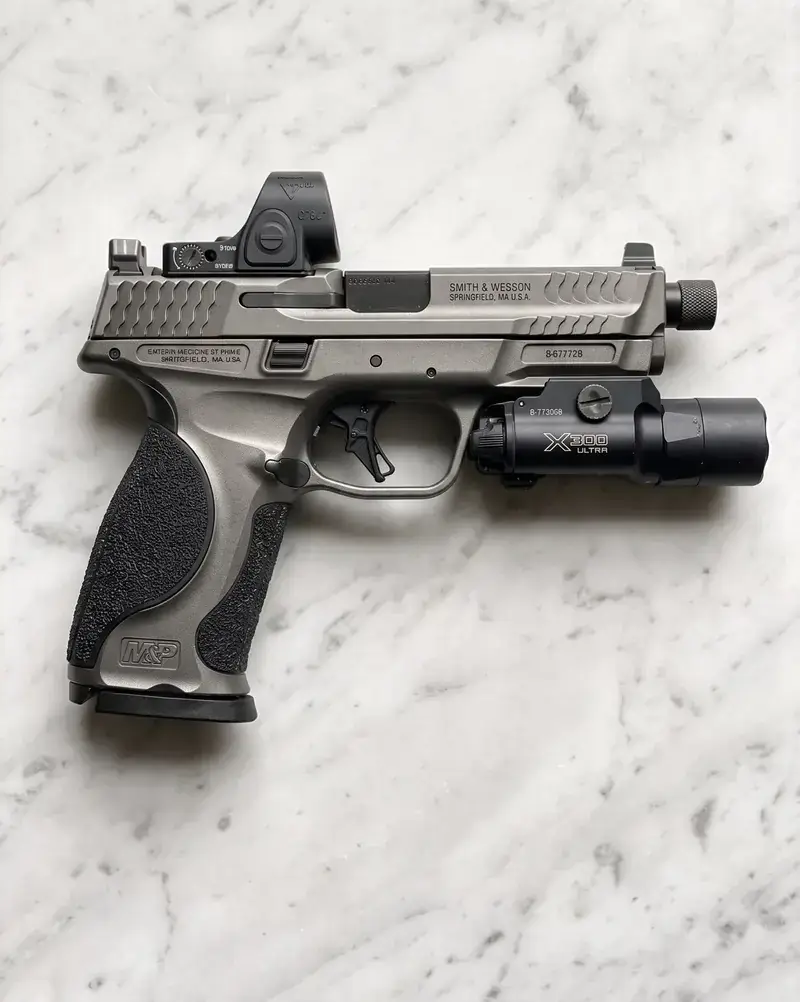
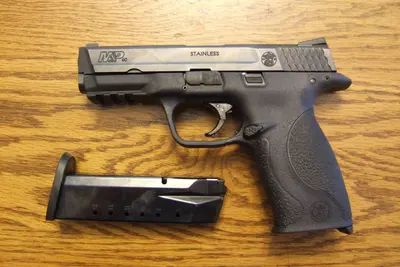
Photo: Keifer Hickey
This isn't my first Smith & Wesson. My original one was a first-gen M&P40c, bought back before I really knew what I was doing. I picked .40 S&W because I liked the idea of a bigger punch in a gun small enough to conceal, and honestly, that gun is a big part of why I trust this brand.
So when I decided I wanted a full-size pistol that could pull double duty — something that could handle range days and competition, not just live in a holster — the M&P 2.0 Full Size Metal was the obvious pick. I already loved how the platform felt in my hand. I wanted that duty-and-competition pedigree S&W has built up, in a gun that could genuinely bridge both worlds instead of just being good at one.
The big thing that sets this one apart is right there in the name — it's got an aluminum frame instead of the usual polymer. That's actually part of a bigger trend right now, with more shooters gravitating back toward metal-frame guns after years of polymer being the default. S&W built this one to give you that metal-gun feel and heft without piling on a ton of extra weight, and from what other reviewers have found running theirs through the wringer, it holds up — accurate, reliable, the kind of gun people complain about mostly because of the price tag, not the performance. And speaking of price, it's still under $1,000 — MSRP online runs $949, which feels fair for what you're getting in a metal-frame gun.
That's been my experience too. I'm somewhere around 2,500 rounds through mine at this point, between range sessions, a local fun match, and my first-ever USPSA match, and I haven't had a single functional hiccup. It just runs.
I've got it set up with a Trijicon SRO, the 2.5 MOA version, and I genuinely can't say enough good things about it — it's been perfect. For a light, I went with a SureFire X300U-B, mostly because the screw mount felt like it would hold up better and stay put compared to some of the clamp-style options out there. It's got a threaded barrel too, and I'm honestly excited to see how it performs suppressed once I get around to that.
Now, here's where I actually learned something. During my first-ever USPSA match, mid-stage, the screws holding my optic sheared and sent the SRO flying off the slide. The optic itself is totally fine and still runs perfectly, so let me be clear — this wasn't a problem with the gun or the optic. It came down to two things on my end: the plastic optic plate that ships with the gun, and the fact that I'd cranked those screws down way tighter than I should have.
I'm already fixing it. The factory plate is getting swapped for a Calculated Kinetics DOGTAG, and the slide is at the gunsmith right now getting sorted. What really stuck with me, though, was how the match director and the whole local club handled it. They let me finish competing since it was my first match ever, and they never once got tired of my questions or stopped handing out advice. That kind of welcome is a big reason I'm already counting down to the next one.
At the end of the day, this gun does exactly what I bought it for — it splits the difference between a duty-and-competition pistol and something I can actually conceal, without making me give up much on either side. The optic issue was on me, not the gun, and it's already handled. If anything, it's made me more excited to keep training, keep learning, and keep competing with it.
This is the first of a lot more stories and reviews coming from FreedomWire. Thanks for riding along.
Get this every Thursday. The week in guns, booze and tobacco, in one quick read.
Comments
No comments yet - be the first to post one.
More from Firearms
All Firearms
The Week In Guns, Booze & Tobacco. In One Quick Read.
The stories that actually mattered, from ATF moves to industry money to what everyone's talking about. Every Thursday. No junk.
Unsubscribing is one click — the link is in every edition.
We store your address to send the newsletter and nothing else.